Ndouop
Tissu Ndop
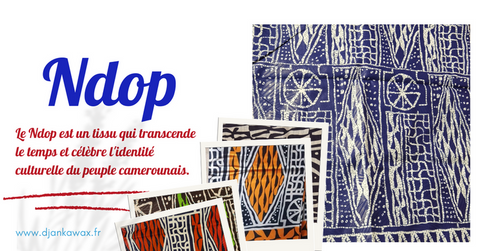
Ndop or dze ndouop or nji ndop1 is a traditional and ritual Bamileke fabric.
Origin:
Ndop fabric is a traditional Cameroonian fabric, originating from the North-West region of the country, mainly from the Bamileke people. It takes its name from the town of Ndop, which is an important center of production of this fabric.
The presence of Ndop in the Grassfields dates back to the 19th century. Before the manufacture of ndop fabric in the West, Wukari ndop was sold in Bamiléké country and came from Nigeria. These fabrics served as currency between the peoples of the Grassfields and those of Nigeria, alongside cowrie shells, before being replaced by paper money.
Here are some important features of Ndop fabric:
Materials Used: Ndop fabric is usually made from cotton. The designs are then applied to the fabric by dyeing using artisanal techniques.
Patterns and Symbols: What sets Ndop fabric apart are the intricate patterns and traditional symbols incorporated into it. These motifs often have deep cultural and symbolic meanings. They can represent elements of nature, historical events, proverbs, legends or cultural values.
Dyeing Techniques: Artisans use specific dyeing techniques to create the designs of Ndop fabric. Traditional colors include black, red, yellow and white. Patterns are usually achieved using a resist technique, where certain parts of the fabric are covered with wax or other substances to prevent dye penetration.
In summary, Ndop fabric is much more than just a textile material. It carries within it the cultural heritage and history of the Bamileke people, and its artisanal production bears witness to local know-how passed down from generation to generation.
Origin:
Ndop fabric is a traditional Cameroonian fabric, originating from the North-West region of the country, mainly from the Bamileke people. It takes its name from the town of Ndop, which is an important center of production of this fabric.
The presence of Ndop in the Grassfields dates back to the 19th century. Before the manufacture of ndop fabric in the West, Wukari ndop was sold in Bamiléké country and came from Nigeria. These fabrics served as currency between the peoples of the Grassfields and those of Nigeria, alongside cowrie shells, before being replaced by paper money.
Here are some important features of Ndop fabric:
Materials Used: Ndop fabric is usually made from cotton. The designs are then applied to the fabric by dyeing using artisanal techniques.
Patterns and Symbols: What sets Ndop fabric apart are the intricate patterns and traditional symbols incorporated into it. These motifs often have deep cultural and symbolic meanings. They can represent elements of nature, historical events, proverbs, legends or cultural values.
Dyeing Techniques: Artisans use specific dyeing techniques to create the designs of Ndop fabric. Traditional colors include black, red, yellow and white. Patterns are usually achieved using a resist technique, where certain parts of the fabric are covered with wax or other substances to prevent dye penetration.
Traditional Uses: Ndop fabric is often used to make traditional clothing worn on special occasions, such as ritual ceremonies, weddings and other cultural events. It can also be used as a home decoration.
Cultural significance: Ndop fabric is of great cultural significance to the Bamileke people. It is considered a symbol of cultural identity and is often passed down from generation to generation.
Local craftsmanship: The production of Ndop fabric is often the result of artisanal work carried out by local artisans. These artisans often specialize in creating intricate designs and are generally well respected within their community.
Contemporary Evolution: Although Ndop fabric has deep roots in tradition, one can also observe contemporary variations that sometimes incorporate modern elements while preserving the cultural essence of the fabric.
Cultural significance: Ndop fabric is of great cultural significance to the Bamileke people. It is considered a symbol of cultural identity and is often passed down from generation to generation.
Local craftsmanship: The production of Ndop fabric is often the result of artisanal work carried out by local artisans. These artisans often specialize in creating intricate designs and are generally well respected within their community.
Contemporary Evolution: Although Ndop fabric has deep roots in tradition, one can also observe contemporary variations that sometimes incorporate modern elements while preserving the cultural essence of the fabric.
In summary, Ndop fabric is much more than just a textile material. It carries within it the cultural heritage and history of the Bamileke people, and its artisanal production bears witness to local know-how passed down from generation to generation.


